BobsPlumbingVideos.com

Real Life Plumbing Advice for People Who Don't Want To Call A Plumber

  • Home
  • How-To-Fix Videos
    • General Plumbing
    • In The Kitchen
    • In The Bathroom
    • Toilet Repairs
    • Heating Problems
    • Hot Water Problems
  • Plumbing Articles
    • Quick Tips
    • Tool Reviews
    • Bobs Recommended Tools
  • About BPV
    • About Bob Sessa
    • Press Photos
    • Follow BobsPlumbingVideos.com
    • Find a Local Plumber – Coming Soon!
  • Got A Plumbing Problem? Ask Bob
You are here: Home

How To Remove a Sewer Cover

September 15, 2014 By BobsPlumbingVideos Leave a Comment

In this video I’m going to point out a few ways you can go about removing a sewer cover that’s most likely never been touched since the day it was put into service. Most of us don’t think about the clean-out access to our sewer system, but trust me the day will come when either the professional plumber or you will have to remove them to service the sewer.

Here in the New York City area a majority of the existing sewer covers have never been removed and when a blockage of the trap or main sewer occurs, they’ve got to come off in order to perform the service. Being a professional with years of experience I’ve developed my own technique for chopping them out with a sharp cold chisel but would caution the novice from attempting this for fear of damaging the cast iron hub the covers screw into.

If your going to be bold enough to attempt a job like this, I recommend you drill a series of holes around the raised brass section of the cover you would normally place a wrench on to remove it. Once that’s drilled out and removed you can then proceed to use a reciprocating saw and make a couple of cuts and remove a small piece of the cover. You can then get a cold chisel and proceed to collapse the remaining portion of the cover.

My preferred replacement cover is a lead fit-all cover which simply secured in place by striking them head on with your hammer and for quick removal, tapping them on either side will do the trick. Lately I’ve been coming across these rubber test plugs in lieu of the lead fit-all cover and can tell you from experience that they sometimes don’t remove very easily. When faced with a house trap or main sewer blockage the last thing you need is to be struggling with a sewer cover when you have boat load of sewage ready to shoot up and hit you in the face!

Why not check out the video and see exactly what I mean. I personally would recommend calling in a professional for this type of repair but if you’re bold enough, go for it. If their is something in the video you’re not quite sure about you can always reach me at info@bobsplumbingvideos.com.

Best of Luck and…
HAPPY PLUMBING!
Filed Under: How-To-Fix Videos Tagged With: how to cut out a sewer cover, how to remove a sewer cover, lead sewer plug, replace a sewer cover, sewer cover, sewer cover removal, sewer cover repair

How To Connect Kitchen & Bathroom Drains.

September 15, 2014 By BobsPlumbingVideos Leave a Comment

In two previous videos “How To Connect a “P” Trap To a Kitchen Sink” and “How To Cut Out a Rotted Waste Nipple” I showed you some options on how to make the transition from the “P” Trap over to the actual sink drain. In this updated video I illustrate some more methods and materials on how to get from the drain line exiting the wall to the trap and onto to actual fixture drain.

I received a number of e-mails from followers who were still unsure of how to go about it, so I hope this will clarify the procedure a little better. To demonstrate for kitchen sink drains which are typically 2″ in diameter I mounted a pipe flange to my board simply to hold the pipe in place. The flange is not something you would see in actual field conditions, you would simply see a piece of pipe exiting the wall.

With all the modern materials available today, you’re no longer limited to one or two options anymore. Back in the day you pretty much would have to cut out and remove the leaking drain line which was very labor intensive. That’s no longer the case and you now have endless possibilities. Whether it be galvanized steel, cast iron, P.V.C or A.B.S., their is literally and connection method for each of the fore mentioned.

The one thing I think that’s important when performing these repairs is you should try and bring the fixture trap a.k.a. “P” trap as close as possible to the fixture drain. I often see the trap right up against the wall followed by crazy configurations of waste tubing connecting the drain. That waste tubing is made of very light gauge metal and in a short period of time will rot and inevitably have to be replaced.

Check out the video from start to finish and if you’re still unsure about something send your inquiry’s and photos over to info@bobsplumbingvideos.com.

I’d love to hear from you!
HAPPY PLUMBING!.

Filed Under: How-To-Fix Videos, In The Bathroom, In The Kitchen Tagged With: how to connect a bathroom sink, how to connect a kitchen sink, how to connect a sink drain, how to connect different pipe material, how to install a p trap

Emergency Plumbing Prevention

August 12, 2014 By BobsPlumbingVideos Leave a Comment

Your Plumbing Systems

Just as the human body and family car need periodic examinations and check-ups, so does your homes plumbing systems.

Most people wouldn’t think of driving thousands of miles without checking the condition of their vehicle. Unlike the family car however, your plumbing systems doesn’t have warning lights to alert you of potential problems.

Ironically, this is the most often used system in your home and it undergoes the most wear and tear.

Homeowners insurance policies normally include fire, flood, liability, etc. coverage. But they don’t protect one of the most important items in your home: Your Plumbing Systems!

Ask yourself what it would be like not being able to use your toilet, bathtub, sinks, water heater, dishwasher or washing machine?

shutterstock_84870076

What Is Emergency Plumbing Prevention?

Simply put it’s a through annual visual inspection of all your homes plumbing systems which should include: faucets, fixtures (sinks & toilets), shut-off valves, drains, water heater, and all exposed piping throughout your home.

In my plumbing business I actually perform these annual inspections for my own customers and document a detailed checklist of each room to point out the weak spots.

I’ll recommend what needs immediate attention, and also point out areas what might need attention in the future. Although many home owners see this practice as having little value, they often change their mind when that overlooked repair turns into an emergency in the middle of the night.

Now their faced with calling one of those after hours emergency plumbing companies which will take advantage that opportunity when it happens.


Are you aware that 99% of all plumbing emergencies can be avoided!

When I complete a service call and offer to perform a whole house plumbing inspection, sadly most homeowners choose to decline this service out of fear that I’ll try to sell them something.

They’ll often tell me that they looked things over and everything is fine and are anxious to get me out of the house. What I’ve found over the years is that most homeowners don’t have the technical expertise to make themselves aware of a potential plumbing problem that could turn into a plumbing emergency.

I’ve pointed out some problems for customers that required immediate attention at which point they declined the repair. A few weeks later that minor repair turned into a plumbing emergency after which I get a phone call saying why didn’t I fix it when I was their. That’s when I show them a copy of the declined repair with their signature. GO FIGURE!

By not taking advantage of a simple visual annual plumbing systems inspection you can probably look forward to: higher water bills, pre-mature faucet, fixture and water heater replacement, higher costs for necessary plumbing repair and replacements and most important, not being able to get your regular plumber when that emergency occurs!

Don’t fall victim to one of those after hours emergency plumbing companies, ask your plumber to perform a through inspection of your homes plumbing systems today. If by some chance he gets a dazed and confused look on his face, I would seriously consider finding a new plumber.

If you have any questions or concersns about anything I covered today you can always reach me at info@bobsplumbingvideos.com. I look forward to hearing from you.

HAPPY PLUMBING!

Filed Under: General Plumbing, Plumbing Articles Tagged With: emergency plumbing check-ups, emergency plumbing prevention, emergency plumbing tips

Cleaning a Clogged Drain – D.I.Y. or Call a Pro?

August 12, 2014 By BobsPlumbingVideos Leave a Comment

shutterstock_65970970

SOFT CLOGS

Although clogged drains come in many flavors, I’m going to be talking specifically about the typical clogged kitchen, lavatory or tub drain.

Should you do it yourself or should you call in a pro?

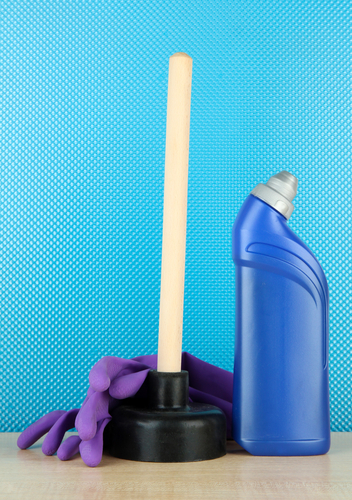
Well it depends! If it’s a soft stoppage located in the fixture “P” trap a good old fashion plunger generally will get the job done. I like to have the water cover the top of my plunger to insure I don’t allow any air to get sucked into the drain. Rather than push down I like to start in the down position and the pull up briskly to get the maximum suction.

Kitchen sinks are pretty straight forward but on lavatory sinks and bathtubs you have to remember to cover the overflow with a cloth or sponge or the water will just shoot back toward you when you start plunging away.

Again this method will often work when it’s a relatively soft clog in or near the fixture “P” trap. Contrary to what you may see on TV, I can tell you that over my 35 years in the business I can count on one hand how many clogs I’ve found in fixture traps.

For some reason they always end up being 10 feet or farther downstream of the fixture in which case a plunger is not going to help.


shutterstock_143108275

DRAIN CLEANERS

OK so the next train of thought might be to go and try some of that popular drain cleaning stuff they advertise on TV.

This sounds all fine and well but again unless the clog is in or close to the fixture trap your trying to clear, you’re just throwing your money down the drain.

For the record I’m not a big fan of throwing harsh chemicals into the plumbing systems, it’s dangerous for you and your plumber. If the clog is 10 feet or farther down the line, the drain cleaner will never reach it. Besides if you look at the instructions on a majority of those drain cleaners, they’ll often say put one or two caps full down the drain and then run the water.

This is just going to dilute the cleaner further in addition to the water that’s already laying in the pipe. If the cause of the clog is grease or soap scum, I prefer using a biological bacteria type cleaner that activates once it’s mixed with water.

The bacteria will eat all the organic matter on the pipe walls leaving it clean as a whistle. These products work best when the water is still flowing and the fixture is not completely clogged. They work incredibly well on grease and soap scum type stoppages.

Now if your stoppage is being caused by hair or perhaps built up scale from the inside of cast iron pipes, it may be time for some mechanical method of clearing the clog aka a SNAKE!


shutterstock_82077325

MECHANICAL CLEANING METHODS

Before I speak about snaking a drain, I want to mention that their are tools that utilize air pressure that you can use to clear clogs quite far down the line. But these are expensive tools generally best left to an experienced tradesman.

As a rule by the time I get the call to clear a drain, the homeowner has already worked on it themselves and has surrendered.

First thing I ask is if any drain cleaner has been tried in which the typical response is “NO”. It doesn’t take long for me to find out that in fact a huge amount of drain cleaner was used. How can you tell you may ask?

As I work my snake in and out of the drain it becomes incredibly clean and shiny, not to mention that slimy and burning feel to it as I retrieve back from the drain. If you’re going to use a chemical drain cleaner please be courteous.

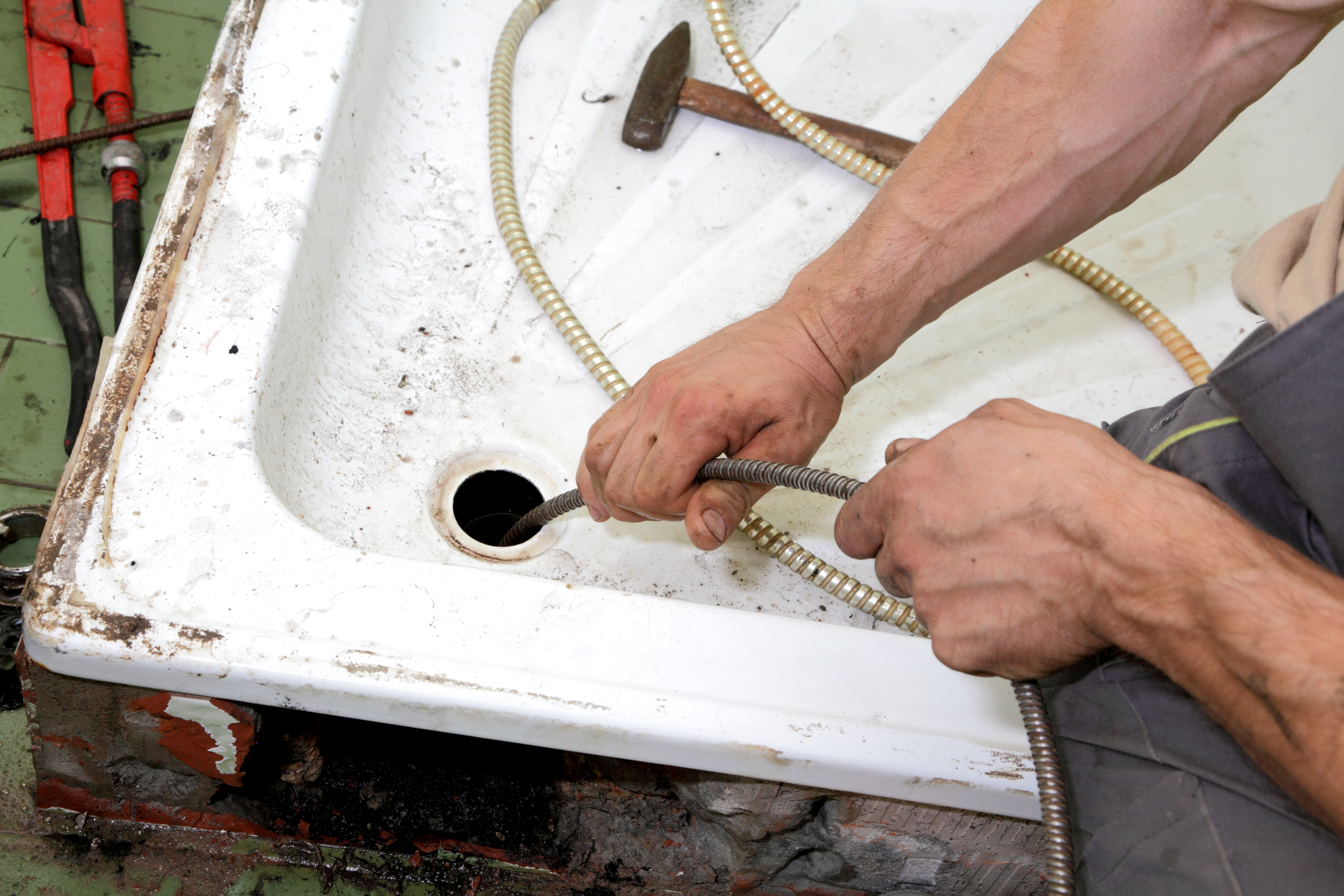
For your safety and his, tell your plumber before he attempts to clear the clog. When I use my snake I like to introduce it through the fixture drain directly through the trap and into the drain line. What this does is allows me to run the water once I clear the clog thus flushing out the line thoroughly.

Some plumbers prefer to dismantle the drain pipes under a sink and then proceed to snake the line, but this make no sense to me because their is no way to flush out the line or even tell if they cleared the line. I believe my method takes a little more skill, but results are always superior.


shutterstock_105607709

SHOULD YOU SNAKE IT OR CALL A PRO?

This is the way I see it. You can certainly can go out and buy an electric or hand snake which are readily available at most of the big box stores.

They’re not professional grade tools by any means but you could get lucky and get the job done. You can also invest upwards of four hundred dollars in a professional Roto-Rooter drain cleaning machine and have a much better chance of success.

Personally if it’s a soft stoppage close to the fixture in question, I say get a good quality plunger and go for it. On the other hand if you’ve got a tough hair or scale type clog, it’ll be well worth while to call in a professional.

They’re fully equipped to handle all types of stoppages and are certainly prepared if things go south. Do you really want to spend your weekend cleaning a clogged drain?

By the way after I snake a drain line I always recommend introducing some bacterial drain maintenance to thoroughly clean the inside of the pipe. When bacteria based cleaners are used on a monthly basis, the need for future mechanical methods can be kept to minimum.

Hope you enjoyed this article and as always you can reach me at info@bobsplumbingvideos.com.

HAPPY PLUMBING!

Filed Under: General Plumbing, Plumbing Articles Tagged With: clogged drain, drain stoppage, sink stoppage, stopped up drain, tub stoppage

Cool Foot Vise Tool

August 8, 2014 By BobsPlumbingVideos Leave a Comment

What the heck is a Foot Vise! Those were exactly my words when I saw this on E-bay. I was browsing thru the tool section one Sunday evening looking for plumbing stuff and saw this for sale. Actually the one in the ad was the model that worked with sizes from 1 1/4″ thru 2″ pipe.I searched E-bay for a model that would take smaller pipe sizes, but couldn’t find anything.

I then proceeded to Google Foot-Vise and to my surprise I was taken to a website called ARGCO.COM. I searched for the smaller model and to my surprise, they were back-ordered. Well needless to say I placed my order and about three weeks later my Foot-Vise arrived. I thought where have I been that I never knew these existed. For small service and repair jobs I always used the good old two pipe wrench method, one acted as a vise and the other to turn the fitting. This worked whether you were working with 1/2″ thru 2″ pipe as long as you were using the proper sized wrenches. The problem always was if you had a stubborn fitting that didn’t want to come off, you chanced getting your knuckles banged up if the wrenches fell over.

This is one of the greatest tools I own and believe it or not, I haven’t even put in my service vehicle yet. WHY! Well that’s going to change as of the publishing date of this article. Check out the video and see if you agree with me, it’s GREAT! And if you’re working with larger sizes 1 1/4″ thru 2″ it’s even better. Trust me trying to make up fittings with a couple of two foot wrenches takes some practice.

Anyway I hope you enjoy this short video and as always you can always reach me at info@bobsplumbingvideos.com.

HAPPY PLUMBING!

Filed Under: Bobs Recommended Tools, Tool Reviews Tagged With: foot vise, footvise, footvise tool, how to use a pipe vise, pipe vise

  • « Previous Page
  • 1
  • …
  • 6
  • 7
  • 8
  • 9
  • 10
  • …
  • 22
  • Next Page »

Voted 3rd Most Popular Site

Connect With Me

facebook twitter google plus youtube

Discover How To Fix The 7 Most Common Home Plumbing Problems Even If You've Never Picked Up A Wrench!

Simply Enter Your First Name & Email Address To Get Instant Access Now!

We will not sell, rent, give away your information. We hate spam too!

Recent Posts

  • Clogged Drain / D.I.Y.
  • Master Plumbers Exam / Practical Test
  • Bathtub Drain Stopper / Trip Waste Assembly

Categories

Like Us On Facebook

Like Us On Facebook

Newsletter · Ask Bob · Privacy Policy · Terms · Sitemap

Copyright © 2026 BobsPlumbingVideos.com · All Rights Reserved · Web Design & Marketing by Urmil Patel